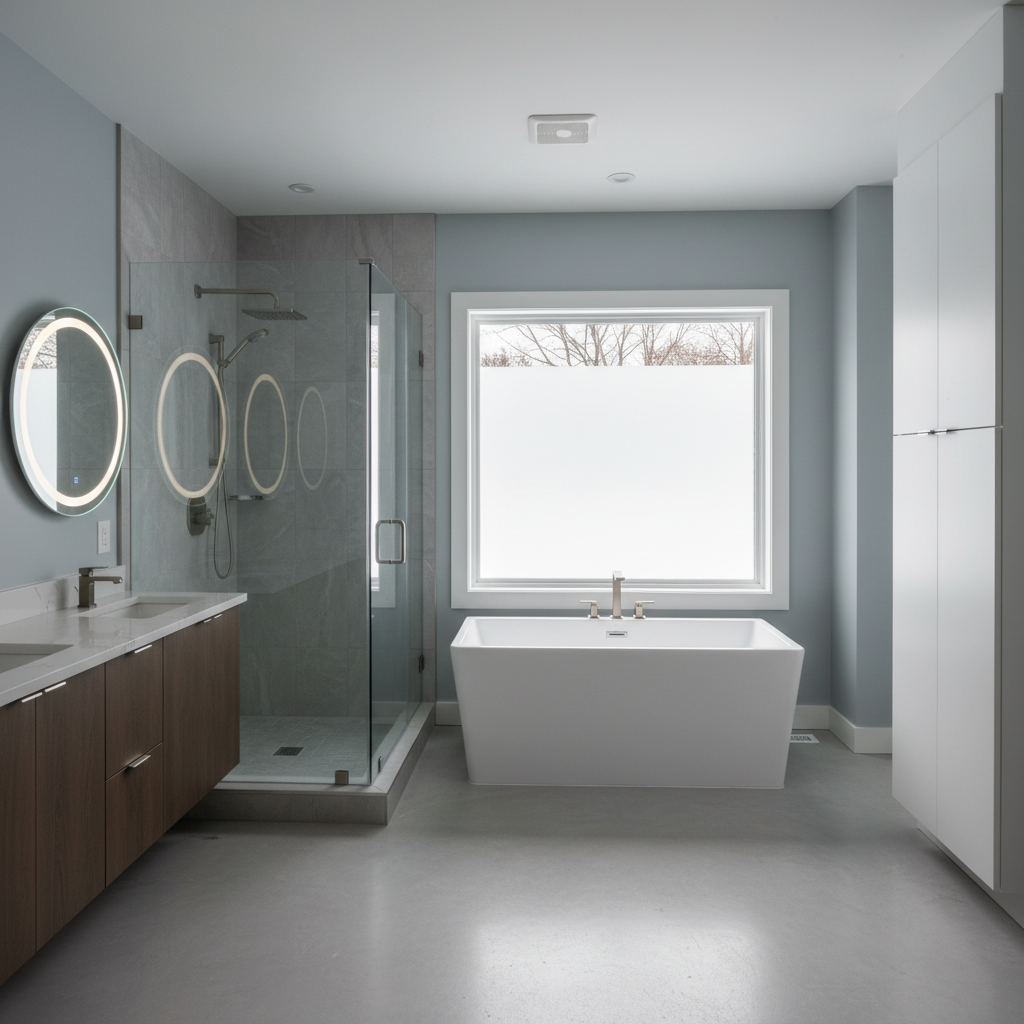
Expanding a bathroom isn't just about knocking down a wall and adding a few feet. It's a complex project, and honestly, here in Rockford, I've seen folks make the same mistakes over and over again. You're putting a lot of time and money into this, so you really want to get it right. Let's talk about some of the biggest problems I see and how you can steer clear of them.
Ignoring Your Home's Structure
This one's probably the biggest. You've got this fantastic idea for a bigger shower or a double vanity, and you're thinking about pushing out into that unused closet or part of a bedroom. That's totally fine, but you absolutely cannot just assume walls are non-load-bearing. I've walked into homes where someone's already started demo, only to find they've cut into a critical support beam. That's not just a headache; it's a safety hazard and a massive, expensive fix, believe me.
Before you even think about moving a wall, you need a professional to assess your home's structure. This isn't just about the wall itself, but what's above it and below it, too. Especially in some of Rockford's older neighborhoods, like those charming bungalows off Broadway, homes have unique framing. You might have balloon framing or specific joist directions that dictate what you can and can't do without major structural reinforcement. Get an engineer or an experienced contractor to take a look early on. It'll save you a world of trouble.
Underestimating Plumbing and Electrical Rerouting
When you expand, you're not just moving a wall; you're often moving fixtures. That means extending or rerouting water supply lines, drain lines, and electrical wiring. This isn't like adding an outlet in an existing wall, you know? You're talking about running new lines through studs, potentially cutting into floor joists, and making sure everything meets code.
- Drainage is tricky: Gravity is your friend with drains, and you can't just run a drain line anywhere. It needs a certain slope to function properly. If you're moving a toilet or a shower across the room, you might need to open up the subfloor and reconfigure your drain system significantly. This can be a big job, especially if your main drain stack isn't conveniently located.
- Electrical loads: A bigger bathroom usually means more lights, more outlets, maybe a heated floor or a fancy new fan. Your existing electrical panel might not have the capacity for all these new demands. You could need a sub-panel or an upgrade to your main panel, which adds to the cost and complexity.
Don't just budget for new fixtures; budget for the hidden work of getting water and power to them safely and effectively.
Forgetting About Ventilation
A bigger bathroom means more air volume, and if you're adding more steam sources (like a larger shower or a separate tub), you need strong ventilation. I've seen people expand their bathrooms, put in beautiful new fixtures, and then wonder why they're suddenly battling mold and mildew. It's because their old, undersized fan just can't keep up.
Rockford's humidity levels, especially in the summer, mean you can't skimp on ventilation. You need a fan that's properly sized for the cubic footage of your new bathroom, and it needs to vent outside, not just into the attic. If you're going for a really large space, you might even consider two fans or a more powerful inline fan system. This is a small detail that makes a huge difference in how long your bathroom lasts and how healthy it stays.
Ignoring Building Codes and Permits
Some homeowners think a bathroom expansion is just a